Godless Prayers
Godless prayers are full of the enormity of that word ‘God’. The godless label is because they don’t fit with much that we’ve grown up with and known.

I've been writing what a friend calls 'godless prayers' for some years now. He thinks I should make a book of them. That title though is a problem. For I don't think of them as 'godless', but rather prayers for when our understanding of God shifts.
Like when we recognize that the dominant Christian metaphor for God as ‘father' is small and human and male and a psychoanalyst's breakfast. And once that scale goes from our eyes it's impossible to glue it back.
Like when we realize the word 'God', this thing which is no-thing, is a kind of placeholder when all words are wanting. And therefore, rather than pretend otherwise, we try to embrace the uncertainty and otherness of it all.
Like when we recognize that the God thing/no-thing is a disrupter of language. It slides between nouns, verbs, and adjectives, and is spatially and simultaneously separate but not separate from us. Which can be unsettling when we’d like everything to be sorted.
Which is a problem. God is something that is very difficult to sort. When something says they ‘know God’ or ‘God has told them to do this or that’, it sounds suspiciously like they have God in their pocket.
So maybe - and prayer is always a maybe - the best prayer is when we lay down the constraints of words and be silent. And try to be still. To be in Being.
And yet we need language to sometimes say something rather than nothing. Especially when we are with others. Especially when we want to say a karakia as a meeting or a meal begins. Especially when we are at those intersections like birth, death, and commitments like marriage. When something feels holy. Or overwhelming. When we want to acknowledge that we are not all there is but are tentative to say more.
So, we say old words that no longer really fit. Or words in a language we barely know. Or we sing together. Or we light a candle. Or we hold hands. Or we create something new. Like this:
May we all have enough.
May we all have enough to eat, enough to give us energy and strength, to last through the day til evening.
May we all have enough encouragement, sustenance and solidarity, songs of belonging to keep us going.
May we all have enough safe spaces, to be, to be with, to enjoy our uniqueness without condemnation.
May we all have enough to eat, enough to share with others, and enjoy the gifts of companionship.
May we all have enough
Ritual, repetition, and remembrance are well-worn pathways of prayer. As are the rhetorical plays of alliteration, assonance, and anaphora, all of which are in the prayer above. Such plays are pleasing and soft on the ear, and verbal prayer is essentially an oral exercise.
Yet all prayers are contextual. They fit the moment and then they don’t. Some are worth repeating in other contexts. At their best they help us acknowledge what is both in our midst and beyond us, what we can see and can’t, and that we belong within something bigger than ourselves.
Godless prayers are full of the enormity of that word ‘God’. The godless label is because they don’t fit with much that we’ve grown up with and known.
Glynn
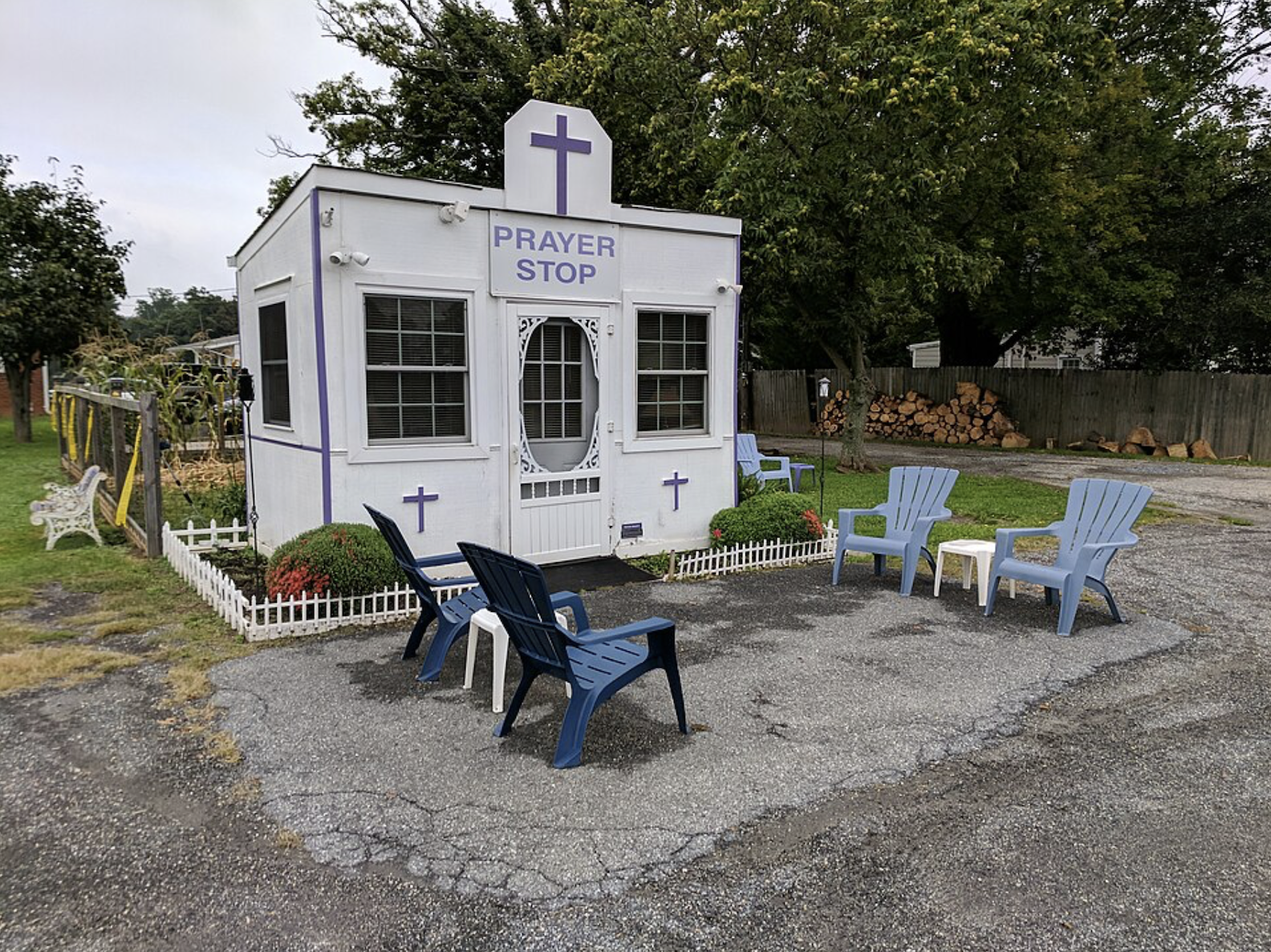
(Photo: Wikimedia Commons.)