Once Upon a Time at a Cemetery
I suspect loneliness, whether articulated as such or not, is the scourge of our time.

Clare Ward, in her book “A Place to Stand: a country doctor’s life in Hokianga”, tells of the tragic death of a two-year-old. Then she writes:
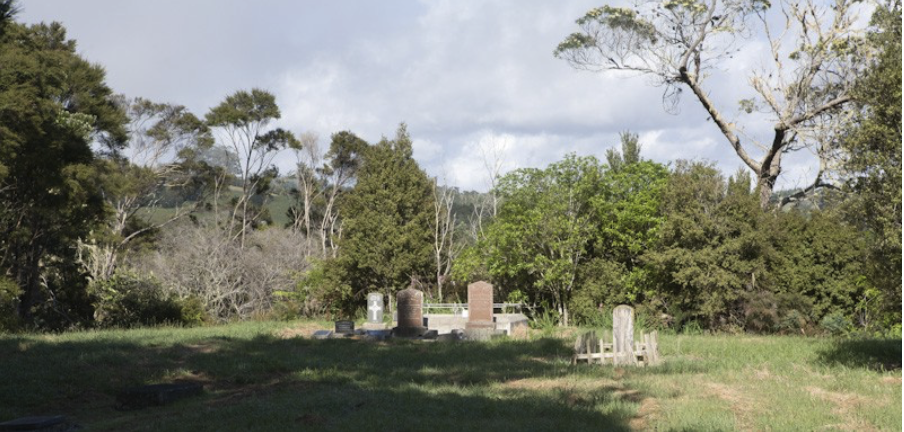
“In the early morning, his father went out to dig his son’s grave. The rural cemetery was a small one with grass and a few headstones. It was half a mile or so away from the homestead. It was still dark. He did not walk quickly. There was no one else to dig the hole.
After a while, from out of the darkness came two other men. They walked alongside him. When he reached the cemetery, the man took up his spade to make the first cut into the earth. ‘E noho koe,’ one of his companions said. ‘You sit; we dig.’
Afterward, long afterward, the father (speaking to his other children) would retell the story about two strangers who knew what it was to lose a child. And in the retelling, he would know again his gratitude and the way his aloneness had left him.
”This brief story of Clare’s is very powerful. It speaks of loss and solidarity. And also, a spirituality common among men which is not acknowledged and honoured enough.
I have dug a grave. It is not easy work. Especially one six feet deep, in clay. It takes time. The muscles ache and the hands begin to blister. Yet, when one is enfolded in grief, the aches and soreness are borne differently. They feel like tears feel. They feel real, whereas most other things feel unreal.
If this story of Clare’s was from the Bible, or from a culture or earlier time when the natural and supernatural were comfortable in each other’s presence, the two strangers might be called angels. And, like their literal meaning ‘messengers of God,’ sent to grieve with the one grieving, and in so doing, in so digging, offer solace. Especially the solace of being not alone.
In my imagination I don’t hear the three men talking to each other. Sometimes there are no words, or way of saying words, that do not sound hollow or contrived. I imagine too that all three would do some digging, taking turns in the hole, grateful that it’s a shared task. Sweating and sore together.
Grateful too, on so many levels, of being with others who knew what it was to suffer such a loss, who knew the feelings without needing to find words.
I suspect loneliness, whether articulated as such or not, is the scourge of our time. The myths of the mighty being those who can make it on their own - self-dependent, self-fulfilling - plague many. Particularly the young. Particularly men.
How good it would be if, in our time of need, out of the darkness, would come two companions to walk silently beside us.
Glynn
(Image: Ōrira Cemetery, Hokianga)