
This Day of Darkness

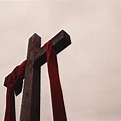
I was talking with a teenager about death. From his perspective death was the worst thing that could happen. It would be the end of everything – dreams,hopes, plans, pleasure, purpose… I’m glad he thought that way. I wish every young person would think that way.
Yet those of us who are older know there are things worse than our own death. Like watching our own suffering in the eyes of those dear to us. Like watching those we love suffer.
One of the things worse than our own death is when death comes to rob us of our young.
John’s Gospel has Jesus’ mother watching him die on the cross. And Michelangelo’s Pieta then places the dead Jesus in his mother’s arms. Mary looks about 48 years young, or after that day, forever old.Some things change you irrevocably.
I talked to a mother whose son had committed suicide. She went to a support group every week. She’d been going for four years. That group was her daily bread and drink, the sustenance that enabled her to keep on living with so much pain.These ordinary people in the support group, whom four years ago she’d never met, were now extraordinary. They were the stars in her darkness.
We don’t know how Jesus’ mother carried on living with such pain. There’s nothing much known about her after that day. Maybe she put on a brave face behind which she withered, dying from the inside out. Maybe she poured herself into the movement that resurrected her son, driving out her personal pain with new purpose in his name, in his memory. (Some parents today do that). Maybe she looked at the specks of light, stars for her, and survived with the hope they gave. Maybe she found friends that helped.
There are a lot of quotes about suffering, often trying to alleviate pain with pithy words, trying to make something noble of it all. Maybe such talk is better than silence, but I’d prefer instead a loaf of gingerbread. (Gingerbread is divine comfort food. Just saying.)
A lot of Christian theology about the cross is trying to find words and meaning,to make sense of it all. But as KateJacobs says, “Sometimes suffering is just suffering. It doesn't make you stronger. It doesn't build character. It only hurts.”
Pain comes in various forms. Sometimes it comes as sickness, sometimes as death, sometimes as uncertainty, sometimes as loneliness, sometimes as abandonment, sometimes as loss of meaning, sometimes in seeing the suffering of others. Pain is like our Auckland weather; you never know quite what the day will bring.
For most of history sickness has been a precursor to death. We feared the common cold. We feared the neighbour with a cold, let alone the stranger to the village. Life was often short. Many children died in infancy, and mothers in childbirth. 48 was old.
Fear was a constant companion. It still is. Though what we fear has changed a bit. Physical pain, for most of us, is now better managed. And we can be in communication with family and friends on the other side of the world. Distance of not knowing is not what it was. And not many worry these days about the afterlife, despite what fundamentalists preach.
Yet fear is not a rational thing. It visits us at all times of the day and night. It visits us when we are young and when we are old. It visits us when we are happy and when we are sad. It visits us when we are about to set off an adventure, when we are about to see others set off on adventures, and when adventures pass us by. It just lurks.
Some talk about ‘overcoming’ fear, or ‘facing’ our fears. I suppose those terms can be helpful; especially when fear gets fed, and overfed, and large, and larger,and then blocks out all light.
But usually fear, especially in its milder form, is something we just live with – like that loud creak in a floorboard we inadvertently stand on in the night, or the winter draught that just comes in bypassing the shut windows. Yes, we try to fix it, plug it, and get rid of it. But it’s persistent, and we have other things needing doing. And so we just live with it.
Sometimes in the wee hours we have a conversation with fear.
In times past fear was personified in religious language as a demon or demons, and their home base was called Hell. Hell was where fears reigned. It was where every action, every thought, every relationship capitulated to fear.
This is the context in which to understand the words given to the Orthodox monk St Silouan the Athonite, “Keep thy mind in hell and despair not.” These words suggest that we can enter the world of fear and not be captivated by it. We can speak to fear, even learn from fear, without fear’s negativity taking control of our lives.
Fear can teach us that we care about others and want others to care about us. Fear can teach us what we care about most, show us our vulnerabilities and ourpriorities.
Fear can teach us too that we are not as self-reliant as we think we are. Self-reliance was always an illusion, for we were always connected in one form,memory, or another.
For that’s the thing about fear. While it might be teaching us, it is also trying to trick us into believing all the negative things others say about us and we say about ourselves. It has a high-speed programme that condenses every negative hurtful thing anyone has ever said about us and then replays it repeatedly.
Another of fear’s tricks is having us believe that we are running out of time. The relationships that aren’t quite right won’t be fixed in time. The things we want to do, and need doing, won’t be done in time. Fear tells us we aren’t busy enough, as if busyness is the solution
The demons called fear try to consume us. And some nights they succeed. Some nights the darkness of despair is all there is. Until the dawn.
Fear,the creek in the floorboard, the wintry draught, the demon who tries to diminish us with half-truths, the dark of despair is our companion. It lurks around our living. And those of us who’ve lived a while, or who’ve travelled into caverns of suffering, know it well.
But fear doesn’t have to define us, and nor should we let it define those close to us or those who need our help. Even with all our flaws we can be, at least for a little while, another’s light. When a few of us flawed ones get together, and share our laughter, our sustenance, and our fragility… the starlight can grow stronger.
This day, this yearly day of darkness, when the memory of suffering and the pain of our living is acknowledged and in a strange way honoured, on this Good Friday let us remember that the goodness arises from us. We are the fragile stars that need to shine both for others and others for us.

.jpg)
