
Thoughts on Baptism and Advent

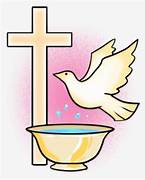
A few brief thoughts on baptism:
First thought: It is not a joining ritual for you already belong. Rather it is a celebration and affirmation of belonging.
There are people and churches who will not allow or administer baptism until you formally join their church or faith. That is not me or St Luke’s. For baptism I believe is primarily about God’s commitment to us, which is encapsulated in the phrase: ‘God loves you unconditionally.’
The ‘unconditionally’ word is important because so much of what passes for love is conditional. God loves you unconditionally means this: No matter what you think of yourself, no matter what you have done, no matter who you have hurt or how bad, no matter whether you have said sorry or repented, no matter what you believe or don’t, no matter… God loves you, believes in, wants the best for you. This is the primary and paramount truth of Christianity.
Second thought then: You do not have to believe to belong. Or have a surrogate (like a parent or godparent) to believe for you. Rather the ritual is about God believing in you.
Third thought: God does not just live in churches, or in people’s hearts, or other sacred places. Rather we live in God. If we were fish, God is the ocean. Although, in the case of God, the ocean is also inside the fish as well as outside of its body (all metaphors have their limits). So, we are in God and God is in us.
People, myself included, can fall into the trap of picturing God too small. We make God the size of a human being, the size of a king or potentate. We make God into a father, and even give God a literal son. Or we picture God living in a place called heaven and sending that son as his ambassador to earth. All these pictures are too small. And if taken literally become nonsense. Like the Soviet poster after the first cosmonauts went into space and said ‘There is no God!’ – meaning God is not here in space. As if they, or anyone, knew what to look for!
Yet, we need pictures, metaphors, to help us to talk about God and what really matters. God is a way of talking about what really matters. But we need to continually point out the limits of pictures and metaphors and imagine new ones lest God becomes solely a projection of ourselves and our needs.
Fourth thought: Baptism is about celebrating and affirming what really matters. Which is life. And a child, the one(s) being baptised.
But a life and a child do not exist in isolation. They exist connected. Connected to the land (whenua),the rivers (awa), the sea (moana), their family (whānau), their communities (hapu and iwi), and to through them to all on Earth and Earth itself (Papatūānuku).
And what we affirm and celebrate, in addition to existence, is all that makes for wellbeing. Like a connection to all which I have just said – but a connection grounded in respect, dignity, encouragement, freedom, kindness, equality, belonging, and most of all love.
Love is so powerful, especially when that love strives to be unconditional, that it has become for many of us the picture of God we refer to most often. So, when we say, as StJohn once did, ‘God is love,’ we mean that not only is the nature of God loving, but the whole essence and substance of God is unconditional love.
Last thought: This ritual of affirming and celebrating anticipates that the child or the one being baptised, will in the strength of knowing and being surrounded by love and wellbeing, live a contributory life, namely enhancing the love and wellbeing of others. As they have received, they will give. Just as a child learns to smile by being smiled at, so they will smile at others and in so giving seed the world with goodness.
In the beginning was life, and rituals to honour and celebrate life.
Long before Christianity or Christmas came to be there were rituals to mark the turning from the days of darkness to the days of light. Yes, the Solstice had to do with the weather and seasons, and the hunting and agricultural tasks of each. But it also came to have spiritual meaning.
There were things to leave behind in the dark. Fears, sorrows, and regrets. Things that can weigh us down. Things that we wish had not happened, we had not done, and had not caused injury. Things that might be difficult, if not impossible, to repair. Things that happened, as John O’Donohue says [i],in all our ‘small, secret prisons.’
Yet, it was now the season for turning. To, quoting O’Donohue again, ‘set our feet free in the pastures of possibilities.’ To come into the light so that our eyes might ‘behold what a miracle a day is.’ And when the twilight comes our ‘fears and darkness are sheltered within a circle of ease.’
Our Christian forebears called this season for turning Advent. And the primary metaphor they used was that of pregnancy and preparing for the birth of a baby. They taught that while the world might be full of fears, suffering, and tribulations, there is – hidden away in a womb – a new life gestating, hope is readying to come into this world. So, there are candles and Advent Calendars to count down the weeks and days. A time of waiting. A time of anticipation.
Advent has become, especially here in the southern antipodes, primarily a time of preparation. The sort of happy organising headache that expectant tired parents know well. And we with end of year parties, Christmas feasts, Christmas services, and holidays to follow – and all the preparation these entail – also know well. It is a busytime. It can a very busy and stressful time. Yet also a happy time.
The problem with this Antipodean Advent is the absence of pauses amid busyness. Pauses to reflect on the turning; for turnings are always a time to reflect. This is why I chose O’Donohue’s poem for our reading today.
I have taken the liberty of formatting it into four paragraphs or stanzas, the first of which I have already referred to. Though I omitted his first line, and maybe the defining line of the whole poem: ‘May the beauty of your life become more visible to you, that you may glimpse your wild divinity.’
Consider for a moment that what is gestating and will soon come to birth is the realisation that each one of us is beautiful, our life is beautiful, and each one of us has a wild divinity. God is coming to birth in each one of us.
So, in the second stanza, there are five imperatives, which I have paraphrased:
Firstly, allow the angel of memory to surprise you. Lean into the strength of your memories. Especially the goodwill of your dead.
Secondly, don’t allow any dark hand to quench the candle of hope in your heart. And similarly protect, how you can, any you love from such a hand. Hope is precious.
Third. Be generous towards yourself, and engage with your life as a great adventure. Be kind to yourself. Encourage yourself by doing something new or different or risky.
Fourth. Don’t let the outside voices of fear and despair find an echo in you.
And lastly, always trust the urgency and wisdom of your own spirit. For your life is beautiful and contains a wild divinity.
There is a lot more in this poem to lean into. I won’t comment on it all, save, particularly pertinent in our Antipodean Advent, the line from the fourth stanza: ‘May you find enough stillness and silence to savour the kiss of God on your soul and delight in the eternity that shaped you, that holds you and calls you.’
[i] John O’Donohue, from ‘Beauty – The InvisibleEmbrace’
.jpg)
