
Not Original
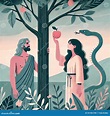
Augustine of Hippo (354 – 430 CE) was an interesting character. He was probably a Berber, a native of North Africa, but he was a Roman too, speaking Latin, and a student at several Roman universities. He described his younger years as “sensual” and said in his Confessions he had a lot to be ashamed about. He explored several philosophies, notably Manichaeism and Neo Platonism, but eventually became a Christian, then a priest. In 395 he became Bishop of Hippo, now in Algeria, and for 35 years wrote and taught there, until his death.
Augustine is considered one of the four greatest theologians, and he wrote with force and skill. His most influential doctrine was that of original sin. He said that the story of Adam and Eve in Eden teaches us that sin entered the world when they ate the forbidden fruit. That sin was transmitted by procreation to every human born. So a tiny newborn baby is born sinful, and needing baptism and regeneration to avoid death and hell.
This implausible and repulsive doctrine was confirmed by numerous councils and popes. John Donne, in the 16th C, reflects the widespread acceptance of original sin when he wrote: “Wilt thou forgive that sin where I begunne, Which is my sin, though it were done before? In case you think it’s just a catholic doctrine, it was adopted by both Calvin and Luther in the Reformation. Within our lifetime, Matthew Fox was censured for questioning it.
The logic for original sin hangs entirely on the story of Adam and Eve. Augustine insisted they were real people. If they were not actual people, the procreation of sin would not follow, and his whole doctrine is invalid.
So let’s look at this ancient story of a man, a woman, a snake and a tree. Augustine commits an error when he considers it. He is not interested in the author’s intention, only in the doctrine he can derive from it. What did the ancient author intend? I am quite certain that this is an allegory. An allegory is a description of one subject under the guise of another. It is a symbolic representation. The word actually means ‘other speaking’.
If you want to know how I feel so certain this story is not history but allegory, I can tell you quickly. Snakes don’t talk.
In this allegory about human existence, please notice the following: Nowhere in it is the word Sin. Nowhere are mentioned the words Fall or Transgression. Nowhere can be found Disobedience, Pride or Shame. Nowhere are there the words Evil or Wicked; the snake is crafty or cunning, not evil. And nowhere will you find reference to Satan, an idea unknown at the time, but a big part of Augustine’s argument. For if sin was to enter a perfect creation, there had to be a bad guy to introduce it.
When I was a theological student, and I asked too many awkward questions about religious belief, my theology professor used to say, “Allan, do you really think you know better than Athanasius and Augustine and Aquinas and Calvin?” At last my day has come: I am confident that Augustine and Calvin were completely wrong about the story of Adam and Eve. It’s not about sin, that dreadful preoccupation of theologians. It’s about how life is, about the reality we live in.
Here’s how the allegory is presented: To start, the man and woman are in a state of innocence. They don’t even notice they are naked. They are like little children, they don’t know shame or guilt. Nor do they know the difference between good and evil. How do they get from that state to a state of adult maturity? Well, the God of the allegory tells them there is the possibility of growing up, but it’s at a cost. To grow up you have to become independent and responsible for your behaviour. You have to let go fantasies about not dying, about living forever, about being god. You have to step on from innocence and make choices, for good or evil, believing in yourself, no longer under the shadow of mum and dad.
So the issue in the story is not really one of sin and its consequences, which obsessed Augustine throughout his life. This is about the universal pattern of human transition from innocence to maturity and the consequences of that transition. It’s the movement from blind obedience without full understanding of the reasons for the obedience to a state of choice and responsibility. This is not a Fall. It’s a nascent into adulthood, and the ability to do great good, or great harm.
The consequences of adulthood are you have to work for your living, you have to fight the weeds and the bad weather. You have to as a woman give birth with pain.(You don’t have to be subject to your partner; that’s a glitch in the allegory). And we all have to accept the inevitable reality of dying. Hard though life can be in the real world, would you really want to swap it for childlike innocence forever? Not that there’s much choice.
Throughout the story the God figure is a firm but loving father. He’s a caring Dad when he engages the childlike Adam in naming the birds and animals. Later, without any hint of punishment, God helps the maturing Adam and Eve be aware of the hardships they will face when they leave the garden of childhood for the real world. As a loving and caring father he personally takes time to dress them in clothing he makes himself, so they will be warm and protected.
The snake is the villain in the allegory. Ancient Semitic people had an aversion to snakes, because of their danger to life and perhaps their appearance. Fear breeds dislike. There are a couple of dozen references to snakes in the Hebrew Bible, and none of them are complimentary. So it’s not surprising that the author makes the snake the figure who edges the woman out of comfort into choice.
A word about Paul’s words in Romans chapter 5. Paul is another theologian obsessed by sin. He uses the word 41 times in his letter to the Romans. How many times does he use the word Agape, Love? Only 13. And he does believe that sin entered the world through Adam. But Paul at least can think symbolically. He is fascinated that there are two men, Adam and Jesus. One represents the reality of this hard world, and Jesus represents how this hard world can be so much better, with selflessness and love. That’s a lovely juxtaposition, a lovely image. I think Paul would have a lot of disagreement with Augustine, if they ever met.
Finally, I believe the most important idea that runs through the Adam and Eve story is nothing to do with sin. I believe the story tells us that love is the foundational principle on which the universe is built and for which humans came into existence. We are not meant to be guilty sinners, striving for salvation. We are meant to be lovers, and meant to be magnificent.

.jpg)

