Religious Rubbish
Religion produces a good deal of rubbish, and Christianity is no exception.

Religion produces a good deal of rubbish, and Christianity is no exception.
When dealing with human psychological experience and metaphysical conjecture there is lots of room for rubbish. Or, put more kindly, that which once made sense now does no longer. Or that which was once accepted as right now proven to be wrong. Or that which was once a fable, then called a fact, is now called false.
And there are lots of examples: from a literal heaven above and a hell below, to miraculous births and healings, to praying for and receiving a parking slot.
Of course, rubbish is in the eye of the believer, and what I consider to be rubbish others might revere. That said, I suspect Christians of whatever hue still have to deal with rubbish.
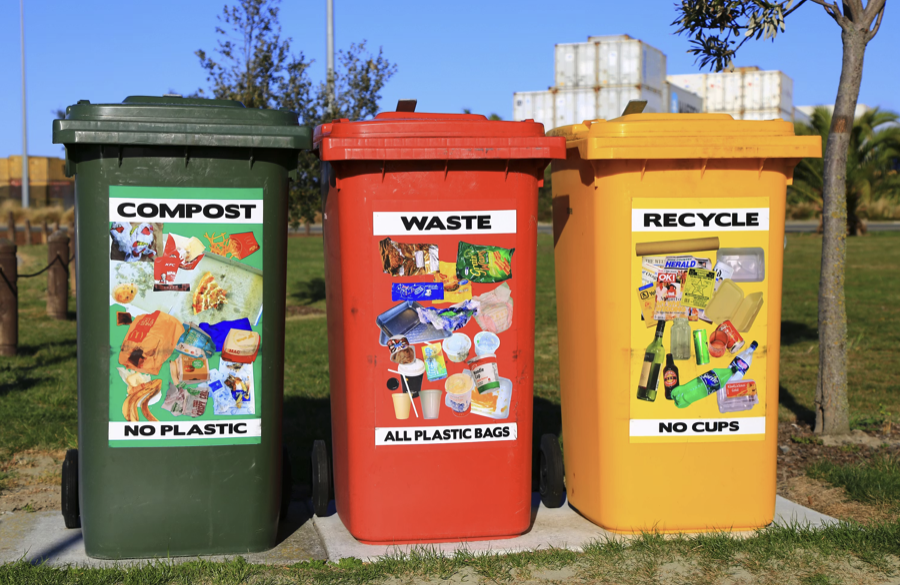
Now some rubbish is compostable. Like, I would argue, some of the better theology of the Church’s first 300 years. You can put in your compost bin, let it stew out of harm’s way, wait a season or three, then use it as mulch. Let it fertilise, without controlling or determining the new.
And some rubbish is recyclable. Poems, prayers, and other writings, with a few tweaks here and there, can have an ongoing and useful life. But these too can date, and often contain mythological assumptions that don't travel easily down the centuries. Even when set to music.
Then there is your usual, standard rubbish, red bin variety, used and useful once, but lacking any enduring merit. Many ministers, being kind to themselves, and kinder to their parishioners, would put most of their old sermons in this bin. That’s why books of sermons are generally lethal. Likewise, most Bible commentaries and theological tomes have a limited shelf-life.
Lastly, there is toxic rubbish.
A friend told me recently that he attended his grandson’s baptism. It was in a big auditorium, with a big screen, with repetitive music, and gesticular preaching. All of which he easily tolerated for the love of his grandson.
However, he was rather dismayed by the service’s altar-call conclusion. Not so much by anything said. Being ‘saved by Jesus’ language was to be expected. It was the flames on the big screen, to illustrate the alternative, that disturbed him.
Using fear in religion has a long and destructive history. And like a lithium battery that ignites, it is not easily extinguished, and often burns and scars those in its proximity.
Then, the other day, I was at a children’s music class. The theme, with the holiday coming up, was Kings. My young charge didn’t want to don a crown like the other children. I quipped, humorously I thought, that he was a republican. A woman, knowing my profession, then turned to me and expounded upon the importance of monarchy for understanding Jesus who she said was the ‘King of Kings’.
Oh dear. The disrupter from Nazareth, the one born to a peasant woman and who died a low-born death, whose followers called him ‘Lord’ in order to challenge and subvert all lordly power and privilege, had been pacified. His head crowned not with thorns but gold. His actions and message repackaged to be no threat to empires. And modern-day monarchs held to be exemplars of him. Oh dear, oh dear.
This might not seem to have the same toxicity as the flames, but I would argue it’s a slow burn. And I’m aware that Christians project all sorts of attributes and status upon Jesus, so it’s tempting to let it slide. And it’s not that I have anything against King Charles and all (indeed I pity them).
But to so reformat Jesus into something he was so plainly not, and by doing so make him a supporter rather than a subverter of imperial governance, is to domestic something fundamental about Christianity. Or so it seems to me. Maybe you’d put ‘Jesus the Monarch’ into the compost or the red bin. Or try to recycle him as a butterfly??
Glynn
(Image: Unsplash – Nareeta Martin)